
















Vacuum Glass Air Freight Risk Avoidance Guide: Complete Operation Skills for Middle East Shipping
Many foreign trade and engineering clients often face losses when shipping vacuum glass via air freight to middle east. The glass sealing layer is easily damaged and the vacuum degree fails during flight. Today, we share practical industry knowledge based on a real shipping case to help everyone avoid risks when arranging air freight to middle east.
A client named Khalid undertook a high-end hotel project in Dubai. He needed to ship customized vacuum glass with a size of 1.2m×2.4m and a vacuum degree of ≤0.1Pa to UAE in batches.
In the first shipment, Khalid chose a common forwarder with an all-inclusive service promise. However, the forwarder did not arrange a constant temperature cabin specially needed for vacuum glass. During the transfer, the cargo was exposed to 50℃ high temperature. Three pieces of glass expanded with heat, the sealing layer failed, and the vacuum standard was not met.
The worst part is the common industry problem. Many ordinary forwarders always evade responsibility. They claim that a 5% loss rate is normal for air freight to middle east, and compensation applications will take at least one month. This will cause huge delays and losses for engineering projects.
In fact, vacuum glass damage is not an inevitable loss. Most small forwarders use ordinary foam and wooden box packaging, which cannot resist air turbulence, air pressure changes and high humidity during flight. This is the main cause of glass damage.
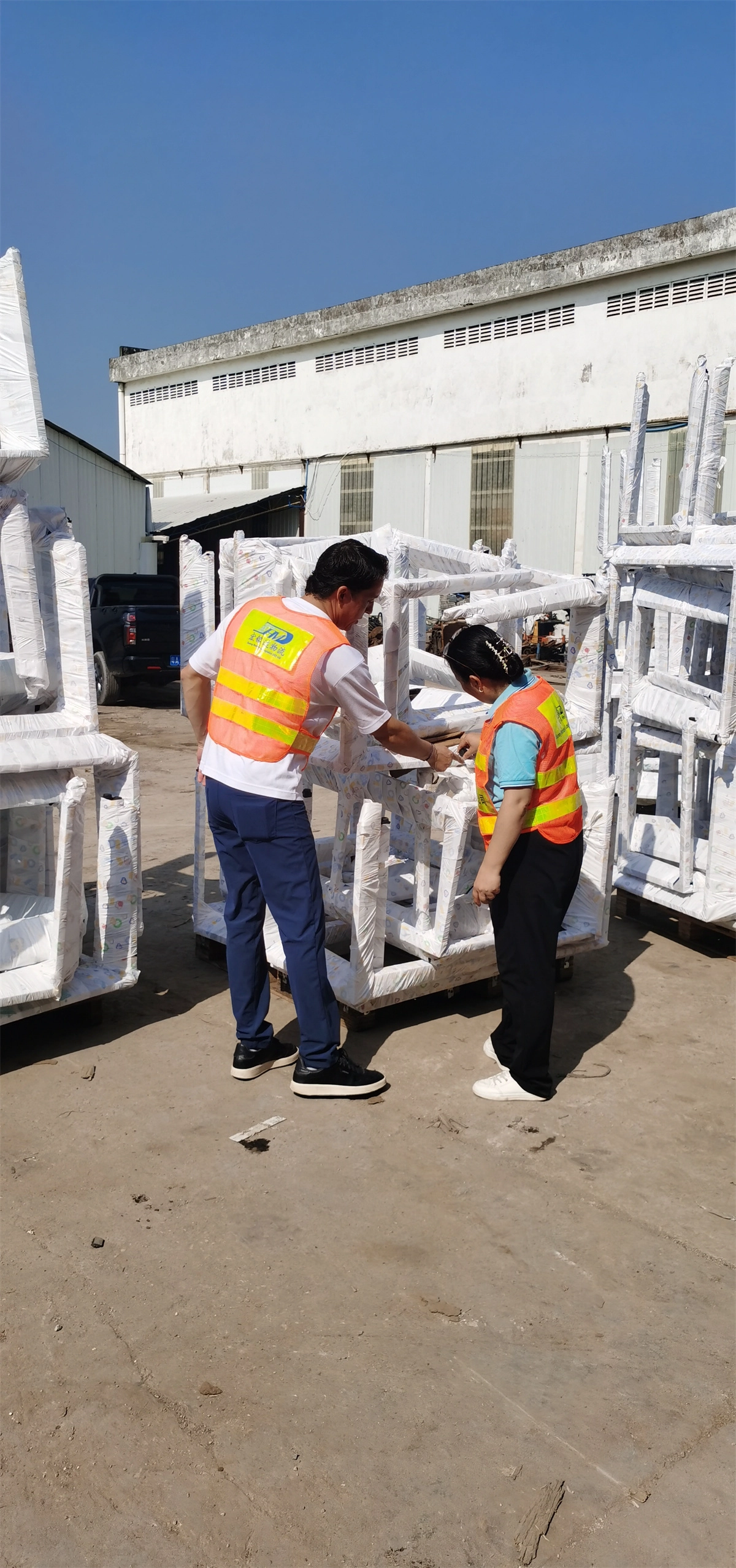
DL sorted out a complete and reusable solution for vacuum glass air transportation, covering packaging, testing and cabin booking.
We customized professional wooden pallets with precise grooves matching the glass thickness. The pallets are equipped with 5cm thick surrounding baffles and 3cm thick EVA foam inside. Every two pieces of glass are separated by 5cm foam boards. Every group of 5 pieces of glass is wrapped with two layers of high-tightness stretch film to resist 75% cabin humidity and prevent sealing failure.
Before shipment, we completed professional simulation tests. The packaged goods passed a 2-hour vibration test of 5-30hz and a 1.2 atmospheric pressure test. All data were qualified before delivery.
We arranged exclusive fragile priority cabin positions of China Southern Airlines with bottom buffer devices. No other goods were stacked on the top to avoid extrusion pressure.
Finally, the goods landed safely at Dubai Airport. After customs clearance, they were delivered to the project temporary warehouse on the same day with zero damage and zero performance failure.
Core industry takeaway: There is no fixed loss rate for precision engineering glass in air freight to middle east. Almost all damages are caused by irregular packaging, missing tests and improper cabin arrangement. For high-precision cargo, professional customized solutions are far more important than simple low-price shipping services.