












How New Foreign Trade Beginners Ask for Quotes and Read Air Freight to Middle East Prices
Many new foreign trade beginners often ask how to inquire about air freight to Middle East and read the quotes. I’ve summarized it for you. After reading this, no one will call you a beginner anymore.
First, the most important question: how to inquire about air freight.
To ask for an air freight quote, you need to provide the quantity, dimensions, and weight of the goods.
You must give the accurate length, width, and height of each piece, to calculate the volume of the cargo.
Also, some small aircraft have size limits due to limited capacity.
Please note: the general height limit for cargo is under 1.5 meters.
Some full cargo planes or small aircraft have separate restrictions.
If your cargo is over-height, you’d better confirm it with your freight forwarder separately.
Now let’s look at this cargo inquiry.
The current cargo information means:
4 pallets, 5470 kg, total volume 3.23 CBM.
4 pallets / 5470KG / 3.23CBM / 125*92*118*4 DXB
EK CAN-DWC-DXB +500 1:200 22.5/K
Starting from the 17th, deliver to Guangzhou
Customs declaration: 250
Other charges: 200
Warehousing fee: 0.5/K, mini 200
Many beginners are confused when they see the quote. They don’t know what these letters and numbers mean.
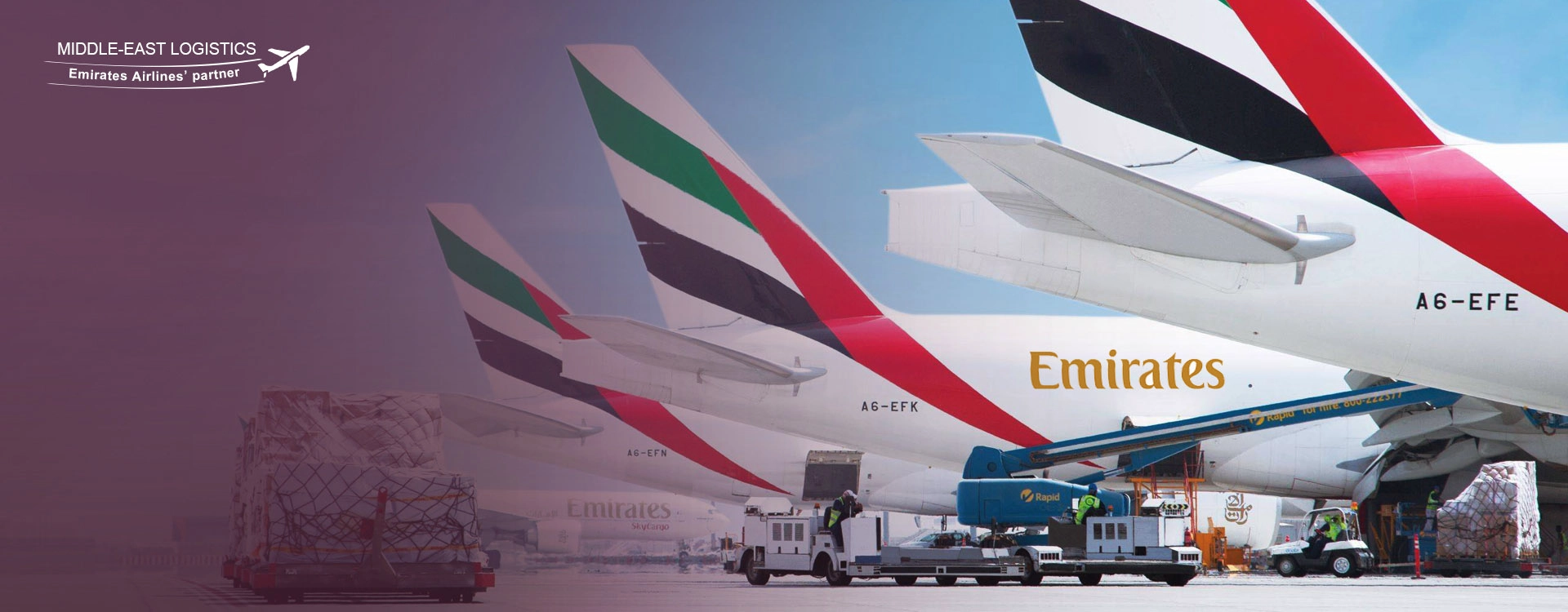
First, EK stands for Emirates Airlines. It means this shipment is carried by EK.
Every airline has its own code. For example, NH is All Nippon Airways, JD is Capital Airlines, etc.
Next: CAN-DWC-DXB.
CAN is the three-letter code for Guangzhou Baiyun Airport.
It means you deliver the goods at Guangzhou Baiyun International Airport,
transit via DWC Al Maktoum International Airport,
and the destination is DXB Dubai International Airport.
The “+500” behind means this price applies to cargo weighing over 500 kg.
There are also +100, +300, +1000, etc. It depends on the airline.
Generally, the heavier the cargo, the lower the price.
If the weight is below 500 kg, the freight rate needs to be reconfirmed.

Many people are even more confused about “1:200”.
This is the cargo density ratio.
If total weight ÷ total volume > 200, this price applies.
There are also 1:300, 1:1000, etc.
Many airlines prefer heavy cargo.
For some airlines, the higher the cargo density, the lower the rate; otherwise, it will be more expensive.
Of course, some airlines do not use this ratio.
Important note:
In air freight, the actual weight and volume are weighed and measured on-site after arrival.
The on-site result is final.
It often happens that the shipper’s own measurement is okay,
but the on-site measurement does not meet the standard, which leads to a higher price.
So if the rate is based on a certain ratio, remind your customer in advance.
The number 22.5 is easy to understand.
It is the unit freight rate: 22.5 RMB per kilogram.
Note: unlike sea freight, all air freight charges are in RMB.
Another important point: the chargeable weight of the cargo.
If the cargo is light-volume cargo,
for example, actual weight is 100 kg, volume is 1 CBM.
The standard air freight calculation is:
CBM × 167 = volumetric weight.
In this case: 1 × 167 = 167 kg.
We compare actual weight and volumetric weight,
and charge based on whichever is larger.
After reading this, most of you should understand air freight much better now.
We are DL Logistics.
We are among the top 5 providers for air freight to Middle East.
We have booked 20 weekly board positions with two major airlines.
We have priority customs clearance channels at UAE airports.
We can pick up goods by priority at the warehouse.
Our local logistics team answers calls at 2:00 AM.
Deliver in the morning, arrive at noon;
deliver at noon, arrive in the afternoon.
Truly one of the top 5 for air freight to Middle East.
Choose DL air freight to Middle East — everyone says it’s smooth and reliable.